A club rig is a fixed thing you show up to. A mobile rig is a thing you show up with, which makes it a completely different design problem: every part has to justify its weight, its power draw, and the space it takes in a car.
Tiny: laptop only #
The most portable rig is the one already in your bag. The single hurdle is that DJing needs two independent audio outputs: one for the speakers and one for your headphones. Laptops only have one.
Do not let the size fool you. A laptop rig can run four decks, and it can route any sound the computer can make: a WhatsApp voice memo from the birthday girl, a YouTube video, a Spotify track somebody insists on. That flexibility is hard to get on hardware.
-
A small multi-output audio interface. Four channels is plenty. Send the cue to the interface's headphone jack (which gets you a real, physical volume knob instead of a keyboard shortcut) and the mains out of the L/R quarter-inch outputs.
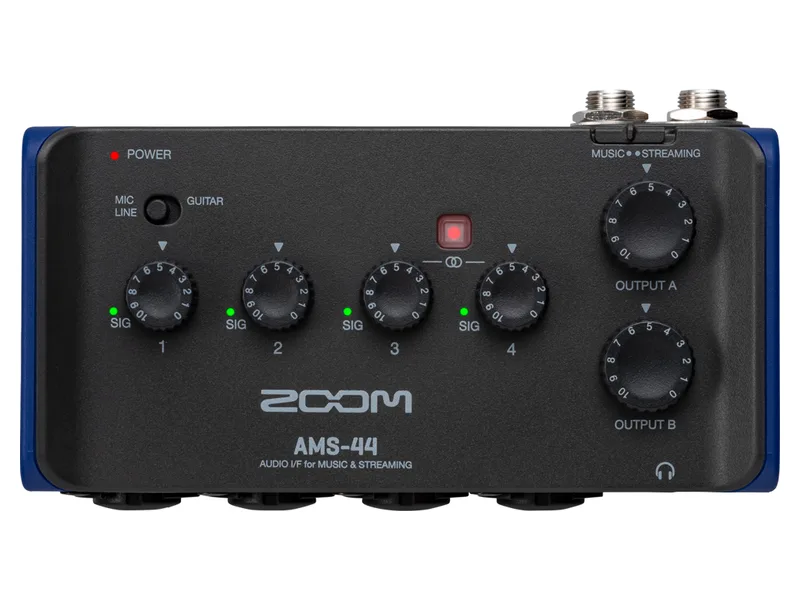
Zoom AMS-44
An adapter changes the shape of a connector, not the electrical nature of the signal. Going from a balanced TRS output into an unbalanced RCA input still works, but you have given up the noise rejection that balanced wiring buys you, so keep the run short.
Small: a controller and a laptop #
Everything here fits in a couple of bags, and unlike the tiny rig it looks like DJing. It's not all about the sound. Sometimes it's worth having a bit more physical presence than someone who looks like they're checking email. You still get four decks (two on the controller, two on the laptop) and you can still route any source you like through the controller's built-in interface.
-
A bus-powered controller like the DDJ-FLX4. The whole unit runs off a single USB-C cable and provides an audio interface for your headphones and your main speakers.
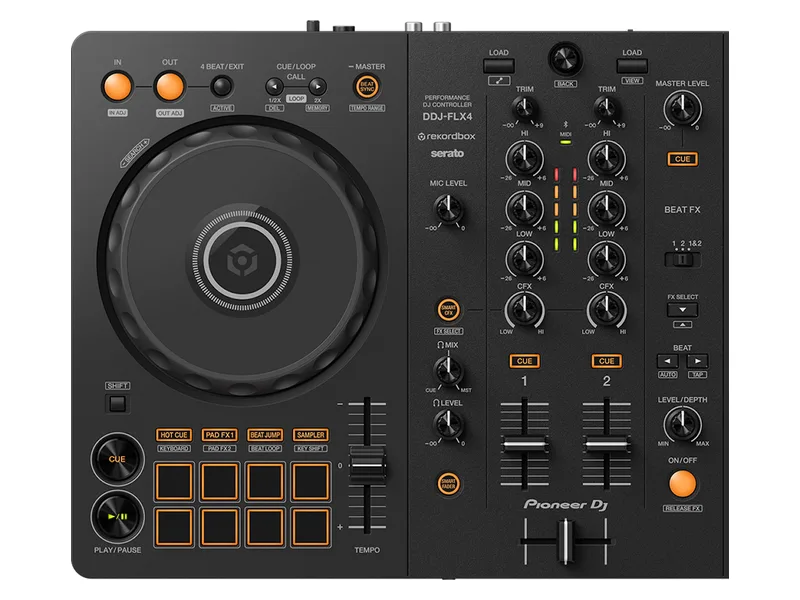
Pioneer DJ DDJ-FLX4 -
A portable power station. A laptop pulls roughly 75 watts, so a 300 watt-hour battery buys you about four hours (300 ÷ 75 = 4), which covers most parties with room to spare.
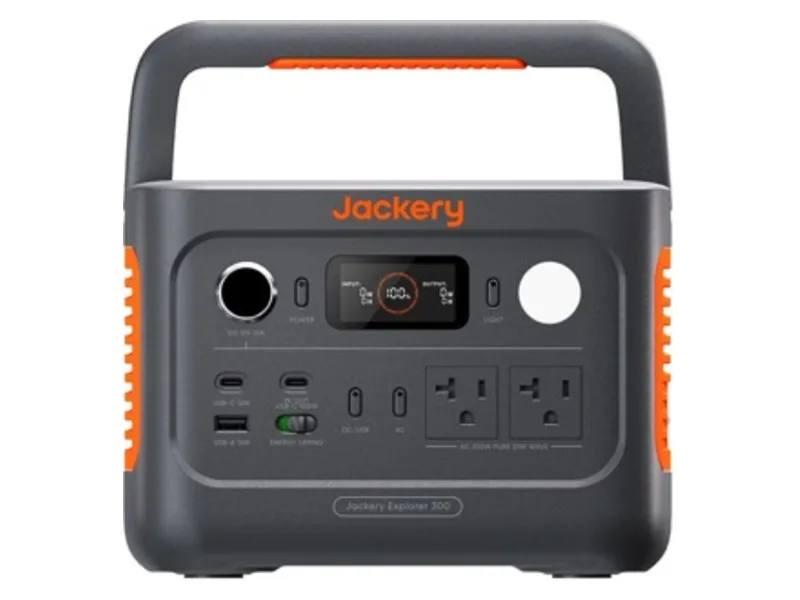
Jackery Explorer 300 Plus -
Two battery-powered speakers, on stands. I'd rather have two smaller speakers than one big one to preserve stereo sound. When they're self-powered, you can place them anywhere and don't need a generator.
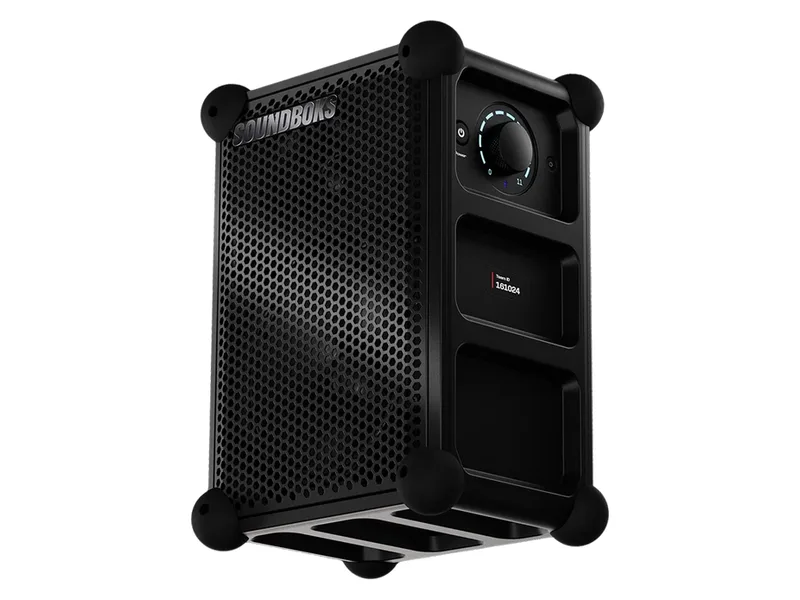
SOUNDBOKS -
A table at the right height, and a laptop stand. This is the least glamorous line item but it's important. You are going to stand at this thing for hours.
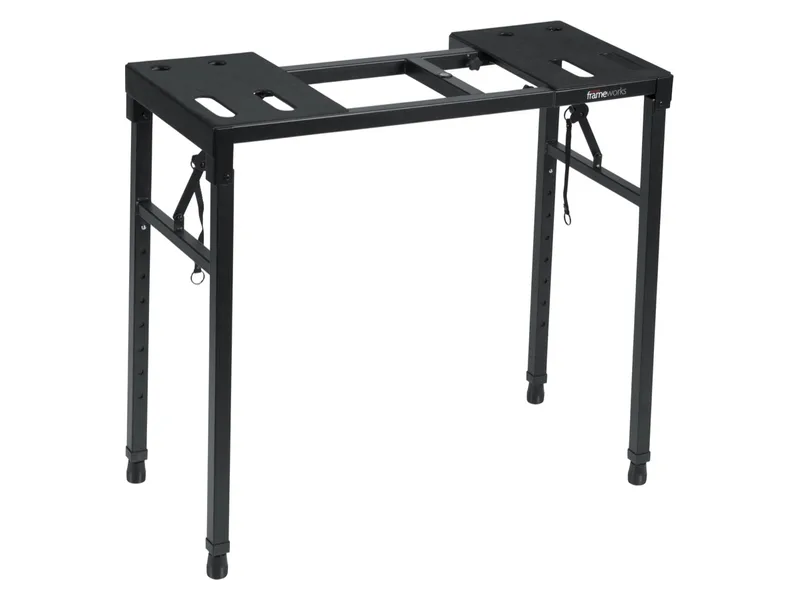
Gator Frameworks keyboard table -
A clamp-on laptop shelf. Bolts to the table and puts the laptop screen up where your eyes already are rather than at the bottom of your neck's range.
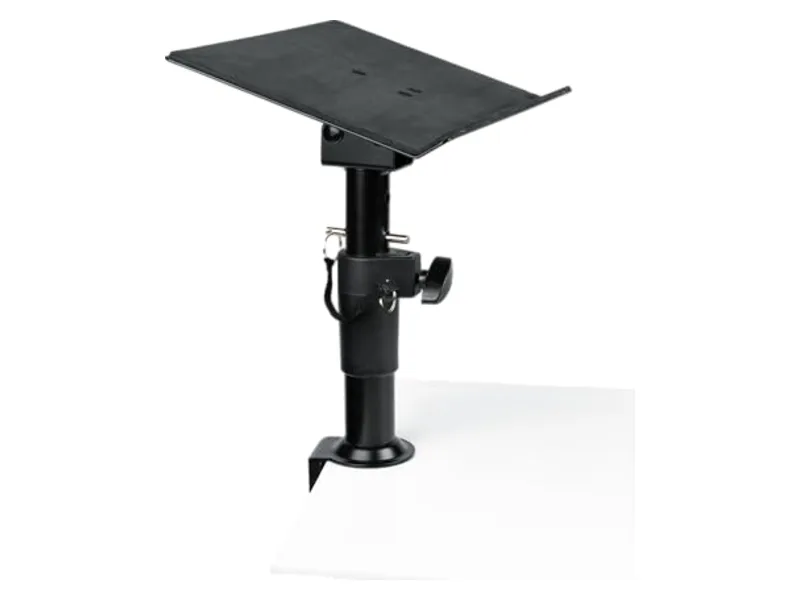
Clamp-on laptop stand
Medium: hardware only #
An all-in-one system puts the players, the mixer, and the screens in one box. A rig this size comfortably runs a block party for around 150 people.
-
An all-in-one system like the XDJ-RX3. There are many to choose from so you can strike a good balance between capability and portability.
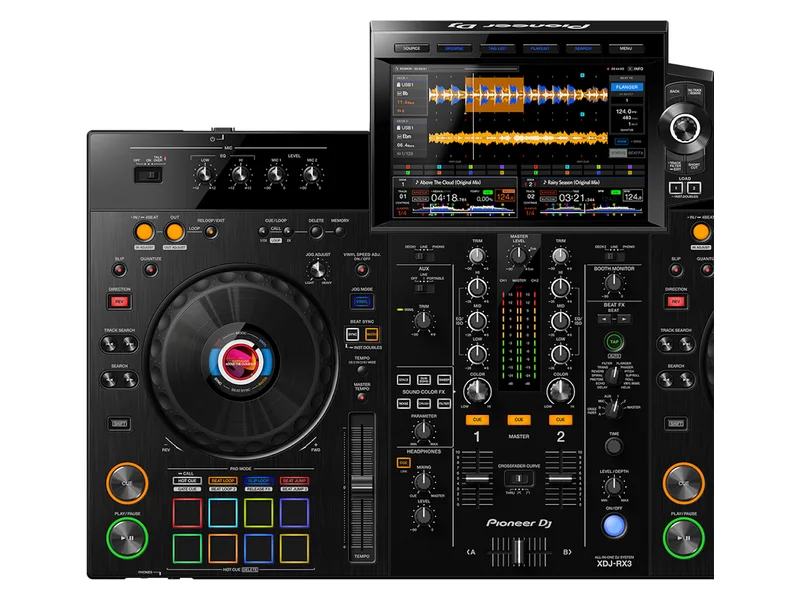
Pioneer DJ XDJ-RX3 -
Folding legs instead of a table. A T-stand workstation collapses to roughly the size of a speaker stand, which means the thing that becomes your table travels like a pole.
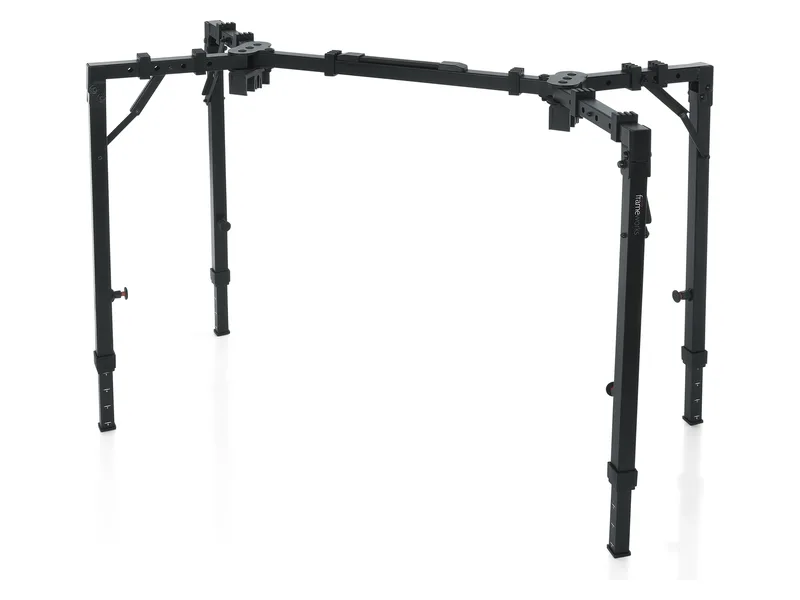
Gator Frameworks T-stand -
The smallest flight case that fits. Shop for the low-profile version of whatever case your gear takes. Cases get heavy fast, and a couple of inches is sometimes the difference you need to pack the car.
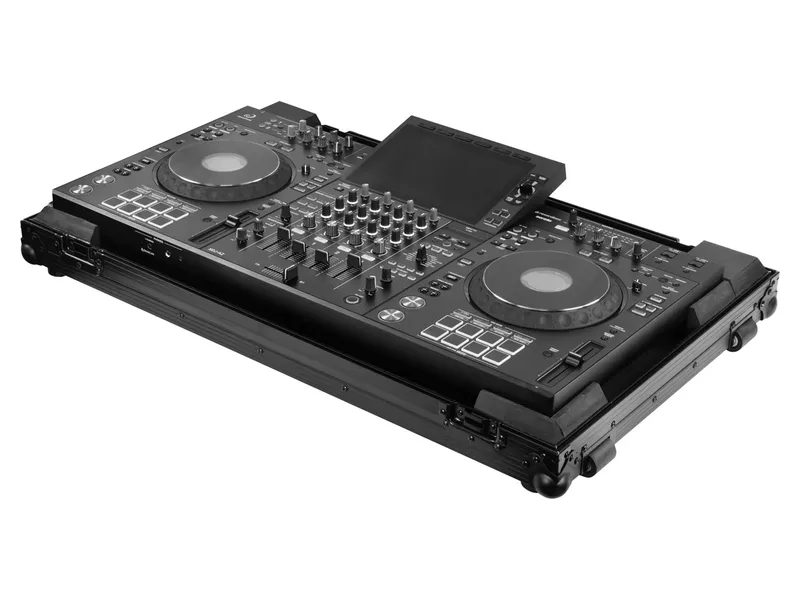
Odyssey low-profile flight case -
A wireless transmitter (optional). A SKAA transmitter sends audio to the speakers over the air. Feeding two speakers costs a fixed 18 milliseconds of delay. Sound covers about a foot per millisecond, so that is the same lateness as standing twenty feet further back in the room. It's tolerable, and your headphones are still wired, so you always have an on-time reference.
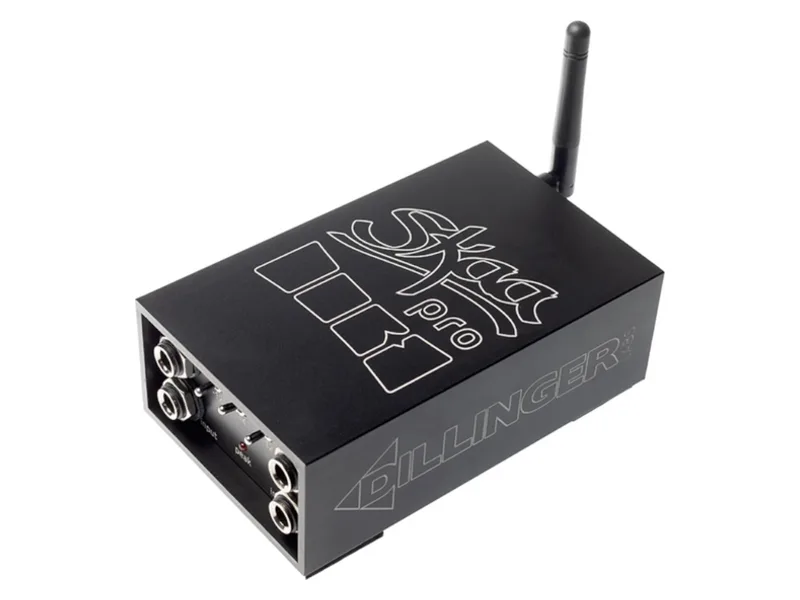
Dani Pro SKAA transmitter -
Battery speakers on stands. Self-powered speakers let the room change shape around you. More people arrive, you scoot the whole front line back. It gets late and the crowd thins, you walk the dance floor in tighter.
-
A third small speaker as a booth monitor, if there's room. Facing you, not the crowd, so you are mixing against what you can hear rather than what the room is doing twenty feet away.
Large: generator territory #
Past a certain size the sound system grows a subwoofer, which changes the power math. Low frequencies move a lot of air, and moving air takes real current — more than a battery you want to carry can supply all night. So there is a generator somewhere in this rig.
- This is also the point to stop pairing prosumer speakers with a subwoofer and move to proper powered PA cabinets. You can do it, but consumer speakers and a real subwoofer rarely agree on where the crossover should sit.
- An all-in-one, standalone players, or whatever you like to play on.
- A real folding table, with flight cases underneath to bring the gear up to a comfortable height.
Avoid plugging your players straight into the generator. Charge the battery off the generator and run your gear off the battery. Generators are slow to respond to a sudden demand for current, so the voltage dips for a moment. Speakers shrug that off. Players reboot, and then you are waiting a minute or two in silence. The battery in between delivers instantly and is being topped up continuously, so the dip never reaches the gear that cares about it.
What carries across every size #
- Two outputs. Something in the rig has to give you a main mix and a separate cue. It's the same requirement every time, just solved by a different box.
- Two speakers. Stereo is worth protecting even at the smallest sizes.
- Ergonomics. Height, reach, and screen position decide how you feel in hour three. Don't skimp on the table.
- Watt-hours. Add up what each device draws and divide the battery's watt-hours by that total. That's your set length, and it's better to know it before you arrive.
- Signal flow doesn't change. Gain staging and signal flow work the same on a folding table as in a club.
In the context of Headroom #
A mobile rig is where the rest of the course gets used at once. Module 2: Signal Flow is what tells you which adapter to reach for, and the equipment modules are what let you look at an unfamiliar box and know what it wants from you.